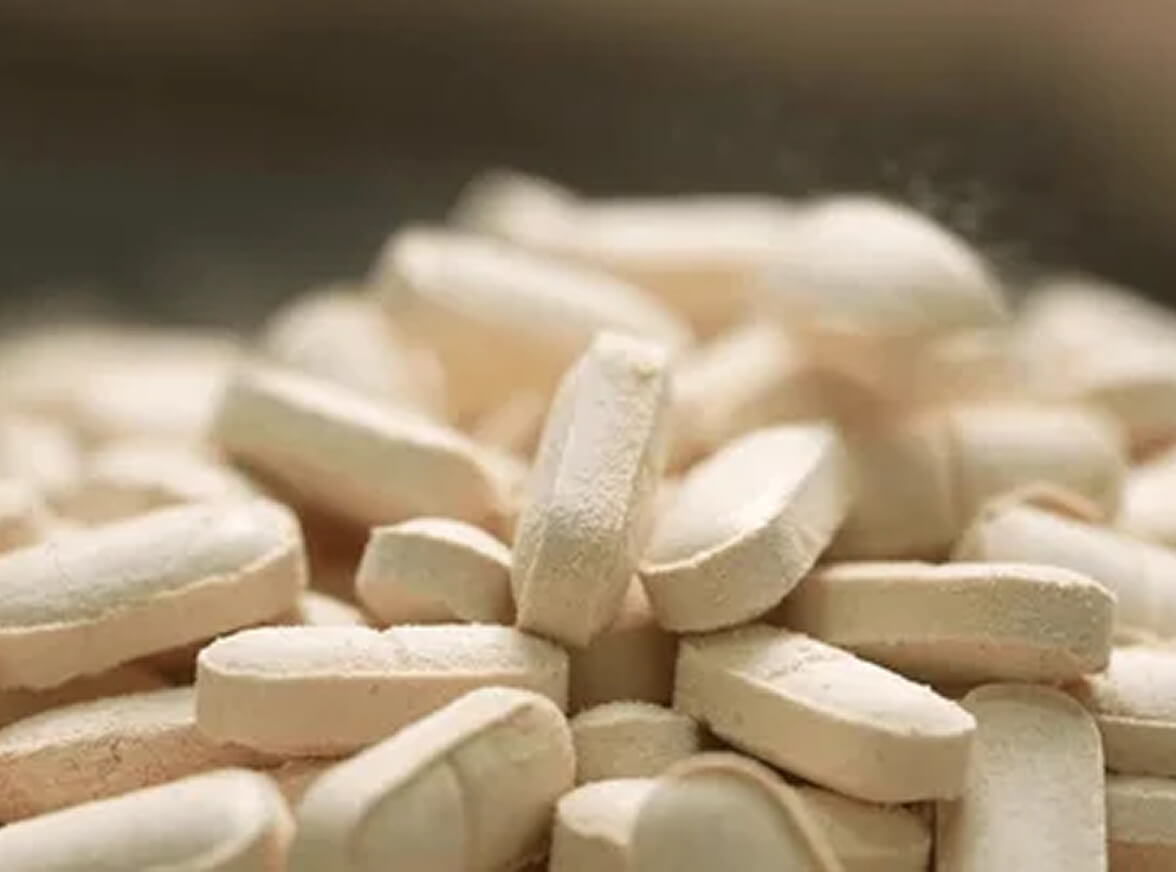
40-50% Rh
Pharmaceutical
Humidity control is critical in pharmaceutical manufacturing as it directly affects product quality, process consistency, contamination risk, and packaging integrity.
Overview
Pharmaceutical manufacturing requires tightly controlled humidity to maintain product quality, process consistency, and cleanroom conditions. Relative humidity affects granulation, tablet compression, coating, sterile manufacturing, packaging, and storage, making stable RH control an important part of reliable GMP production.
Humidity
Why Humidity Control Matters in
Pharmaceutical Manufacturing
Granulation (Wet and Dry)
- RH affects drying, final moisture, flow, and compressibility. Overly dry air can make granules brittle, while high RH can leave excess moisture and cause clumping or sticking.
- Wet granulation: RH affects drying rate and final granule moisture. Air that is too dry can over-dry granules, making them brittle and less compressible. Air that is too humid can leave residual moisture, causing sticking and variable hardness.
- Dry granulation: Many powders and granules are hygroscopic, so high RH can cause clumping and poor flow.
- Target: Consistent loss on drying (LOD), flow, and particle size distribution
Film Coating
- RH controls solvent or water evaporation. Low RH can cause rough or cracked coatings; high RH can lead to tackiness, sticking, and mottling. Typical ranges are 35–60% RH, depending on the formulation.
- Role of humidity: Evaporation rate: RH directly affects solvent/water evaporation from the coating solution. Too low RH → very fast drying → rough, cracked, or orangepeel coatings. Too high RH → slow drying → tacky tablets, sticking, twinning, mottling.
- Balance: enough drying to avoid tackiness, but not so aggressive that film defects appear.
Tablet Compression
- Low RH increases static and weight variation, while high RH can soften tablets and affect excipient performance. A stable, product-specific RH range—often 40–55% is the priority.
Aseptic/Sterile Manufacturing , Cleanroom HVAC
- Very low RH increases electrostatic particle attraction, while very high RH raises microbial risk. Typical control is 40–60% RH in Grade B/C areas, supported by steam humidification and continuous monitoring.
Packaging and Storage
- High RH can reduce shelf life, alter dissolution, and weaken packaging performance, while low RH may make some materials brittle. Packaging rooms are often maintained at 40–50% RH, with validated controls and moisture-protective packaging where needed.
Humidity
World Health Organization Guide specifies
Humidification systems must be well drained and no condensate should accumulate in the air handling systems
Evaporative systems, atomizers and water mist sprays should not be used as these carry a potential risk of microbial contamination
Chemicals such as corrosion inhibitors , scale inhibitors should not be added to boiler systems.